The Union Public Service Commission (UPSC) has released the official Engineering Services Examination (ESE) 2027 Notification on 16 September 2026. The examination will be conducted for recruitment to engineering services and posts under four categories: Civil Engineering, Mechanical Engineering, Electrical Engineering, and Electronics & Telecommunication Engineering.
According to the official notification, the UPSC ESE 2027 online application process starts on 16 September 2026 and the last date to submit the application form is 6 October 2026 up to 6:00 PM. The Engineering Services Preliminary Examination 2027 is scheduled for 31 January 2027, while the Main Examination is scheduled for 18 June 2027.
UPSC ESE 2027 Overview
| Particular | Details |
|---|---|
| Examination Name | Engineering Services Examination 2027 |
| Conducting Body | Union Public Service Commission (UPSC) |
| Notification Date | 16 September 2026 |
| Application Start Date | 16 September 2026 |
| Last Date to Apply | 6 October 2026 |
| Last Time for Application | 6:00 PM |
| Preliminary Examination | 31 January 2027 |
| Main Examination | 18 June 2027 |
| Expected Vacancies | Approximately 480 |
| PwBD Vacancies | 19 |
| Engineering Streams | Civil, Mechanical, Electrical, Electronics & Telecommunication |
| Application Mode | Online |
| Application Fee | ₹200 |
| Fee Exemption | Female, SC, ST and eligible PwBD candidates |
The official notification states that approximately 480 vacancies are expected to be filled through Engineering Services Examination 2027. This figure includes 19 vacancies for Persons with Benchmark Disabilities (PwBD). The number of vacancies is liable to alteration.
The four engineering categories covered under the examination are Civil Engineering, Mechanical Engineering, Electrical Engineering and Electronics & Telecommunication Engineering.
UPSC Engineering Services 2027 Vacancy and Participating Services
The total number of vacancies announced on an approximate basis is 480. UPSC has stated that the vacancy figure can be altered, so candidates should rely on subsequent official updates for any revised vacancy information.
The examination provides recruitment opportunities in several Group-A and Group-B engineering services and posts. The services available depend upon the engineering discipline selected by the candidate.
For Civil Engineering, the notification includes Central Engineering Service, Central Engineering Service (Roads), Survey of India Group ‘A’ Service, AEE (Civil) in Border Roads Engineering Service, AEE (QS&C) in MES Surveyor Cadre, Central Water Engineering Service, Indian Skill Development Service, Indian Railway Management Service (Civil), Indian Railway Management Service (Stores) – Civil Engineering Posts and Indian Defence Service of Engineers.
For Mechanical Engineering, participating services include AEE in GSI Engineering Service, Indian Naval Material Management Service, Defence Aeronautical Quality Assurance Service, Border Roads Engineering Service, Indian Skill Development Service, Indian Railway Management Service, Indian Defence Service of Engineers, Indian Naval Armament Service, Central Water Engineering Service, Central Electrical and Mechanical Engineering Service and Central Power Engineering Service.
The Electrical Engineering category includes services such as Central Electrical & Mechanical Engineering Service, Indian Naval Material Management Service, Central Power Engineering Service, Defence Aeronautical Quality Assurance Service, Indian Skill Development Service, Indian Railway Management Service and other notified engineering posts.
The Electronics & Telecommunication Engineering category includes services and posts associated with telecommunications, railways, naval services and other notified engineering departments.
Service allocation is made according to the applicable examination rules, merit, service preferences and available vacancies. Candidates should therefore read the participating services section carefully before filling their service preferences.
UPSC ESE 2027 Eligibility Criteria
Applicants must satisfy the nationality, age, educational qualification and other conditions prescribed in the Engineering Services Examination 2027 Rules.
Nationality
The candidate must satisfy the nationality requirements prescribed by UPSC. The rules include Indian citizens and certain other categories such as subjects of Nepal or Bhutan, eligible Tibetan refugees and specified persons of Indian origin who have migrated to India with the intention of permanently settling in the country.
Where a certificate of eligibility from the Government of India is required, the candidate must obtain the necessary certificate before appointment.
Age Limit
The candidate must have attained 21 years of age and must not have attained 30 years of age on 1 January 2027.
| Age Condition | Date |
|---|---|
| Minimum Age | 21 Years |
| Maximum Age | 30 Years |
| Age Cut-off Date | 1 January 2027 |
| Date of Birth Range | 2 January 1997 to 1 January 2006 |
Age relaxation is available to eligible reserved and special categories according to the notified rules. For example, eligible SC/ST candidates can receive relaxation of up to 5 years, while eligible OBC candidates can receive relaxation of up to 3 years.
Separate provisions are available for certain defence personnel, ex-servicemen, ECOs/SSCOs, departmental candidates and PwBD candidates. PwBD candidates may receive the relaxation prescribed under the relevant rules, subject to the applicable conditions.
The date of birth accepted by UPSC is the date recorded in the Matriculation or Secondary School Leaving Certificate or an accepted equivalent certificate. Candidates should enter their date of birth carefully because changes are not permitted later.
Educational Qualification
The primary educational requirement for UPSC Engineering Services Examination 2027 is an Engineering degree from a recognised university or institution, or another qualification specifically accepted under the Engineering Services Examination rules.
The notification contains provisions covering recognised engineering degrees and certain equivalent qualifications. Candidates should check the exact qualification applicable to their selected engineering category and service.
Candidates who have appeared in a qualifying examination but whose result has not yet been declared may apply subject to the conditions prescribed by UPSC. Candidates who subsequently qualify for the Personality Test/Interview must provide proof of passing the required examination within the prescribed period.
UPSC provides a specific window after declaration of the Main Examination result for candidates who were awaiting their qualifying examination result. Failure to provide the required educational qualification proof within the prescribed period can lead to cancellation of candidature.
Medical and Physical Standards
Candidates finally recommended on the basis of Engineering Services Examination 2027 are required to undergo the prescribed medical examination.
Applicants must also satisfy the physical standards applicable to the concerned services and posts. The detailed standards are provided in the relevant rules and appendices of the Engineering Services Examination.
UPSC ESE 2027 Application Fee
The examination fee for UPSC Engineering Services Examination 2027 is ₹200. Female candidates and candidates belonging to SC, ST and eligible PwBD categories are exempted from payment of the examination fee, subject to the conditions specified in the notification.
| Category | Application Fee |
|---|---|
| General | ₹200 |
| OBC | ₹200 |
| EWS | ₹200 |
| Female | Exempted |
| SC | Exempted |
| ST | Exempted |
| Eligible PwBD | Exempted |
The fee can be paid through the payment methods prescribed by UPSC, including net banking, Visa/Master/RuPay credit or debit cards and UPI.
Applications submitted without the prescribed fee, where payment is required, can be rejected. Candidates should use only the payment modes specified by the Commission.
UPSC ESE 2027 Exam Pattern
The Engineering Services Examination is conducted in three stages: Stage-I Preliminary Examination, Stage-II Main Examination and Stage-III Personality Test/Interview.
Preliminary Examination Pattern
The Preliminary Examination consists of two papers. Paper-I is common to all candidates and covers General Studies and Engineering Aptitude. Paper-II is based on the engineering discipline selected by the candidate.
| Paper | Subject | Duration | Maximum Marks |
|---|---|---|---|
| Paper-I | General Studies and Engineering Aptitude | 2 Hours | 200 |
| Paper-II | Engineering Discipline | 3 Hours | 300 |
| Total | — | 5 Hours | 500 |
The same 500-mark Preliminary structure applies to Civil, Mechanical, Electrical and Electronics & Telecommunication Engineering candidates.
Main Examination Pattern
Candidates qualifying the required standard in the Preliminary Examination are considered for the Engineering Services Main Examination. Stage-II consists of two conventional-type papers from the candidate’s selected engineering discipline.
| Engineering Discipline | Paper-I | Paper-II | Total |
|---|---|---|---|
| Civil Engineering | 300 | 300 | 600 |
| Mechanical Engineering | 300 | 300 | 600 |
| Electrical Engineering | 300 | 300 | 600 |
| Electronics & Telecommunication | 300 | 300 | 600 |
Each Main Examination paper has a duration of 3 hours. The total marks for Stage-II are therefore 600.
The conventional papers must be answered in English and the question papers are set in English only.
Personality Test/Interview
The third stage is the Personality Test/Interview, which carries 200 marks.
Candidates who secure the minimum qualifying marks prescribed by the Commission in Stage-I and Stage-II are called for the Personality Test/Interview. UPSC states that approximately twice the number of vacancies may be summoned for this stage.
The final ranking is determined using the marks obtained in Stage-I, Stage-II and Stage-III. Service allocation is made according to the applicable rules, rank, service preference and available vacancies.
UPSC ESE 2027 Syllabus
The official syllabus consists of the common General Studies and Engineering Aptitude paper and the discipline-specific engineering papers.
The standard of the General Studies and Engineering Aptitude paper is based on the level expected from an Engineering/Science graduate. The standard of the other papers is approximately that of an Engineering Degree Examination of an Indian university. There is no practical examination.
General Studies and Engineering Aptitude Syllabus
The common Paper-I covers ten broad areas. Questions are set from all the listed topics, with the marks assigned to individual topics potentially ranging from 5% to 15% of the paper.
| No. | Syllabus Area |
|---|---|
| 1 | Current issues of national and international importance relating to social, economic and industrial development |
| 2 | Engineering Aptitude, Logical Reasoning and Analytical Ability |
| 3 | Engineering Mathematics and Numerical Analysis |
| 4 | General Principles of Design, Drawing and Importance of Safety |
| 5 | Standards and Quality Practices |
| 6 | Energy and Environment, Pollution, Climate Change and Environmental Impact Assessment |
| 7 | Basics of Project Management |
| 8 | Material Science and Engineering |
| 9 | ICT-based tools and applications in Engineering |
| 10 | Ethics and Values in Engineering Profession |
Civil Engineering Syllabus
The Civil Engineering syllabus covers a wide range of subjects including Building Materials, Solid Mechanics, Structural Analysis, Design of Steel Structures and other core areas of Civil Engineering.
Building Materials includes stone, lime, glass, plastics, steel, FRP, ceramics, aluminium, fly ash, timber, bricks and aggregates. Cement, mortar, concrete, properties, tests and concrete mix design are also included.
Solid Mechanics covers elastic constants, stress, strain, Mohr’s circle, elastic theories of failure, principal stresses, bending, shear and torsion.
Structural Analysis includes determinate and indeterminate structures, trusses, beams, plane frames, rolling loads, influence lines, unit load methods, vibrations, suspended cables and Computer-Aided Design.
The complete Civil Engineering syllabus also includes other prescribed areas such as reinforced concrete, fluid mechanics, hydraulic engineering, environmental engineering, geotechnical engineering, transportation engineering, surveying and construction-related subjects.
Mechanical Engineering Syllabus
The Mechanical Engineering syllabus includes Engineering Mathematics and core subjects such as thermodynamics, fluid mechanics, heat transfer, IC engines, refrigeration and air conditioning, turbines, boilers, power plant engineering, engineering mechanics, strength of materials, machine design, manufacturing, industrial engineering, maintenance, mechatronics and robotics.
Machine Design includes static and dynamic loading, failure theories, fatigue strength, riveted, welded and bolted joints, shafts, gears, bearings, brakes, clutches and flywheels.
Manufacturing and industrial engineering topics include metal casting, metal forming, metal joining, machining, limits, fits and tolerances, metrology, computer-integrated manufacturing, production planning and control, inventory control and operations research.
Mechatronics and Robotics covers microprocessors, microcontrollers, sensors, actuators, PLCs, control systems and robotics-related topics including classification, kinematics and homogeneous coordinates.
Electrical Engineering Syllabus
The Electrical Engineering syllabus includes Engineering Mathematics, Electrical Materials, Electric Circuits and Fields, Electrical and Electronic Measurements, Computer Fundamentals and Basic Electronics Engineering in Paper-I.
Engineering Mathematics covers matrix theory, eigenvalues and eigenvectors, numerical methods, calculus, differential equations, Fourier series, complex variables, probability and statistics.
Electric Circuits and Fields includes KCL, KVL, network analysis, Thevenin’s theorem, Norton’s theorem, Superposition theorem, Maximum Power Transfer theorem, transient response, AC networks, three-phase circuits, magnetic coupling, capacitance, inductance, Gauss theorem, Ampere’s law, Biot-Savart’s law and Maxwell’s equations.
Basic Electronics Engineering includes semiconductor diodes and transistors, BJT, FET and MOSFET devices, transistor amplifiers, oscillators, feedback amplifiers and related topics.
Paper-II includes Analog and Digital Electronics, communication, power systems, electrical machines, power electronics, control systems and other subjects prescribed in the official syllabus.
Electronics & Telecommunication Engineering Syllabus
The Electronics & Telecommunication Engineering syllabus covers Engineering Mathematics and core electronics and communication subjects.
The major areas include electronic devices, analog and digital circuits, communication systems, signals and systems, networks, electromagnetic theory, microwave engineering, computer fundamentals, control systems and telecommunications-related subjects.
Candidates should follow the detailed discipline-specific syllabus given in the official notification because the Main Examination consists of conventional papers from the selected engineering discipline.
UPSC ESE 2027 Important Dates
| Event | Date |
|---|---|
| Notification Released | 16 September 2026 |
| Online Application Starts | 16 September 2026 |
| Last Date to Apply | 6 October 2026 |
| Last Time for Application | 6:00 PM |
| Preliminary Examination | 31 January 2027 |
| Main Examination | 18 June 2027 |
The application window remains open from 16 September 2026 to 6 October 2026 up to 6:00 PM. Candidates should submit the application before the closing time.
How to Apply for UPSC ESE 2027
Candidates have to apply online through the UPSC online application system. The application process includes account creation, Universal Registration Number (URN), Common Application Form (CAF) and the examination-specific module.
Before starting the application, candidates should keep their Matriculation Certificate, educational qualification details, category certificate where applicable, photograph, signature and valid Photo ID details ready.
- Visit the official UPSC online application portal.
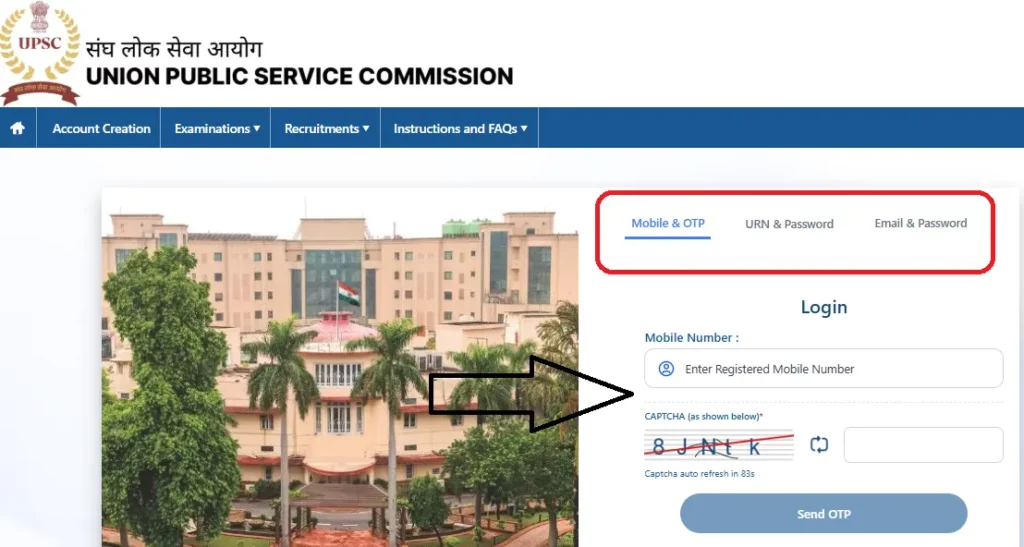
- Create an account and complete the registration process.
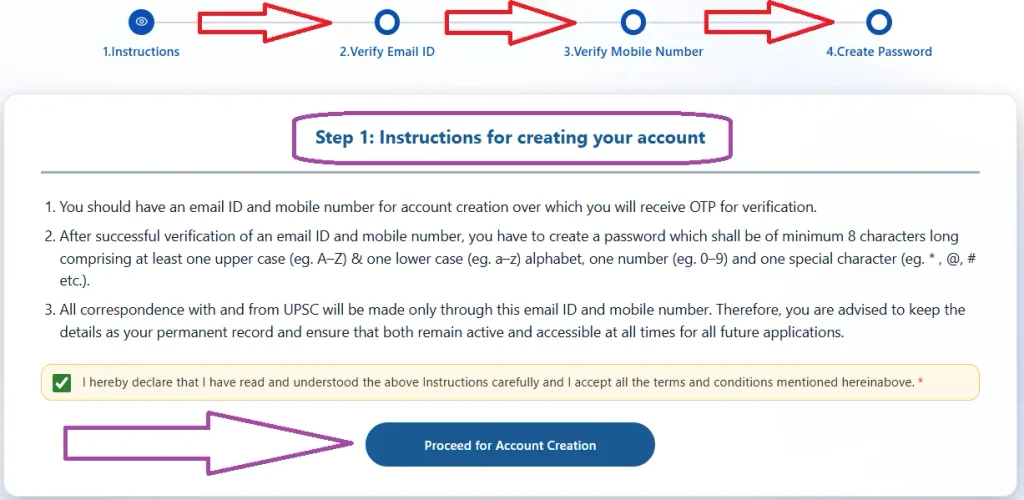
- Generate or access the Universal Registration Number.
- Complete the Common Application Form.
- Enter personal, educational and category details carefully.
- Upload the required photograph and complete live photo capture as instructed.
- Upload the signature according to the prescribed instructions.
- Complete the examination-specific application module.
- Select the engineering discipline and examination centre carefully.
- Pay the applicable examination fee.
- Preview the complete application before submission.
- Submit the application form.
- Save the application number and other details for future use.
UPSC requires candidates to complete the online application between 16 September 2026 and 6 October 2026 up to 6:00 PM. The Commission advises candidates to apply well before the last date instead of waiting until the final hours.
The application system requires candidates to create an account, generate a URN, complete the Common Application Form and then complete the examination-specific module. The prescribed application fee can be paid through the available online payment methods.
Documents Required
| Document | Purpose |
|---|---|
| Matriculation/Secondary Certificate | Age and personal details |
| Engineering Qualification Certificate | Educational qualification |
| SC/ST/OBC/EWS Certificate | Reservation benefit, where applicable |
| Age/Fee Concession Certificate | Concession claim, where applicable |
| PwBD Certificate | PwBD benefit, where applicable |
| Photo ID | Identity verification |
UPSC specifically asks candidates to keep certificates relating to age, educational qualification, reserved category, age or fee concession and PwBD status ready where applicable. Originals are required at the Personality Test/Interview stage.
The accepted Photo ID can include Aadhaar Card, Voter Card, PAN Card, Passport, Driving Licence or another Photo ID issued by the State or Central Government.
UPSC ESE 2027 Examination Centre
The Preliminary Examination is conducted at multiple centres across India. The notification includes cities such as Ahmedabad, Bengaluru, Bhopal, Chandigarh, Chennai, Cuttack, Dehradun, Delhi, Hyderabad, Jaipur, Jammu, Kolkata, Lucknow, Mumbai, Patna, Raipur, Ranchi, Shillong, Shimla, Thiruvananthapuram and Varanasi among the listed centres.
Patna is included among the listed Preliminary Examination centres.
The Main Examination is conducted at a comparatively smaller list of centres. Patna is also included among the listed Main Examination centres.
Candidates should remember that the Commission may change examination centres or examination dates where required. Candidates must appear at the centre mentioned on their e-Admit Card.
Important Instructions for UPSC ESE 2027
Candidates should fill the online form carefully because UPSC does not permit withdrawal of the application after submission. The notification also states that no correction, alteration or modification in the application fields is allowed after submission.
A one-time facility is available for modification of the URN profile. However, changes made to the URN profile do not automatically change applications that have already been submitted.
The e-Admit Card will be made available online. Candidates should download it from the official UPSC website and follow all instructions printed on the admit card.
For objective papers, candidates must follow the prescribed OMR instructions. The Commission states that candidates should use a black ball pen for writing and marking answers in the objective papers.
Mobile phones, smart watches, Bluetooth devices, cameras, AI-enabled glasses and other prohibited electronic or communication devices are not allowed inside the examination venue. Candidates are advised not to bring valuable items because there may be no facility for safe custody.
Entry to the examination venue closes 30 minutes before the commencement of the examination in each session. Candidates should reach the venue early enough to complete identity verification, face authentication and frisking.
Face authentication is mandatory at the examination venue.
For conventional papers, candidates are allowed to use a permitted non-programmable battery-operated pocket calculator. Calculators are not permitted for objective-type papers.
UPSC may deduct up to 5% of the maximum marks for written papers for illegible handwriting. The Commission also states that superficial knowledge does not receive marks and that orderly, effective and exact expression is considered in conventional papers.
Also visit : UPESSC PGT 2026 Notification 2607 Post, Vacancy Details, and Exam Dates
UPSC ESE 2027 Reservation and Certificate Requirements
Reservation benefits are applicable to eligible SC, ST, OBC, EWS and PwBD candidates according to the Government of India rules and the vacancies available for the examination.
Candidates claiming reservation or relaxation must possess the required certificates in the prescribed format within the specified time.
For EWS candidates, the notification specifies an Income & Asset Certificate based on the financial year 2025-26. It should be issued on or after 1 April 2026 and not later than the closing date of the application, i.e. 6 October 2026.
For OBC candidates, the prescribed OBC Non-Creamy Layer certificate must meet the financial-year and issue-date conditions specified by UPSC and must be available by the application closing date.
UPSC ESE 2027 Admit Card
The UPSC Engineering Services Examination 2027 e-Admit Card will be issued online to eligible candidates.
The notification states that the e-Admit Card is scheduled to be issued on the last working day of the preceding week of the examination date, subject to the applicable provisions. Candidates should regularly check the official UPSC website for the admit card link.
The admit card will not be sent through ordinary post. Candidates should download the electronic admit card and check their name, roll number, examination centre, date, timing and instructions before appearing in the examination.
UPSC ESE 2027 Preparation Strategy
The Engineering Services Examination requires preparation for both objective and conventional papers. Candidates should therefore avoid preparing only for the Preliminary Examination and should gradually develop Main Examination answer-writing skills.
For the Preliminary Examination, candidates should complete the General Studies and Engineering Aptitude syllabus along with the complete syllabus of their selected engineering discipline.
Regular objective question practice can help candidates improve speed and accuracy. Since the objective papers contain negative marking, preparation should also focus on avoiding unnecessary guesses.
For the Main Examination, candidates should practise descriptive answers within the three-hour time limit. Engineering diagrams, calculations, definitions, derivations and explanations should be presented clearly wherever required.
The Main Examination consists of two papers of 300 marks each, with three hours allotted to each paper. The official instructions also emphasise orderly, effective and exact expression in conventional papers.
A practical preparation cycle can be followed in four stages:
- Complete the syllabus: Cover the complete common and engineering-discipline syllabus.
- Practice previous questions: Solve previous examination questions and identify recurring concepts.
- Take Preliminary mocks: Practise full-length objective tests with time management.
- Develop Main answer writing: Practise conventional questions with proper presentation and time control.
Candidates should also regularly check official UPSC notices because examination dates, vacancies, centres and other administrative details may be changed through subsequent notifications.
UPSC ESE 2027 Final Selection Process
The final selection process consists of three stages: Preliminary Examination, Main Examination and Personality Test/Interview.
| Stage | Maximum Marks |
|---|---|
| Stage-I Preliminary Examination | 500 |
| Stage-II Main Examination | 600 |
| Stage-III Personality Test/Interview | 200 |
| Total | 1300 |
The final ranking is prepared using the marks obtained at the prescribed stages. Candidates are allocated to services/posts according to their rank, service preferences and available vacancies, subject to the applicable rules.
Candidates finally recommended by UPSC are required to undergo the prescribed medical examination. The Medical Board’s findings are treated as final for allotment purposes under the notified provisions.
UPSC ESE 2027 Direct Application Link
| Resource | Link |
|---|---|
| UPSC Engineering Services Direct Official Link | Creating Your Account Log In |
| UPSC Engineering Services Examination Notification 2027 | PDF Download |
| Official Website | https://upsconline.nic.in/ |
| For Any Educational Updates Join Telegram Channel | NotifyHere |
| For Any Educational Updates On Whatsapp | Join Whatsapp Channel |
| For Study Material Subscribe YouTube Channel | Subscribe NotifyHere |
Conclusion
The UPSC Engineering Services Examination 2027 is being conducted for recruitment to engineering services and posts under Civil, Mechanical, Electrical, and Electronics & Telecommunication Engineering categories.
Approximately 480 vacancies are expected, including 19 PwBD vacancies. The online application process starts on 16 September 2026 and ends on 6 October 2026 at 6:00 PM.
UPSC ESE 2027 FAQs
1. What is UPSC ESE 2027 ?
UPSC Engineering Services Examination (ESE) 2027 is a national-level examination conducted by the Union Public Service Commission for recruitment to various engineering services and posts under Civil, Mechanical, Electrical, and Electronics & Telecommunication Engineering categories.
2. When was the UPSC ESE 2027 notification released ?
The official UPSC Engineering Services Examination 2027 notification was released on 16 September 2026.
3. How many vacancies are announced for UPSC ESE 2027 ?
Approximately 480 vacancies are expected to be filled through UPSC ESE 2027. The vacancy figure is liable to alteration by the Commission.
4. How many engineering streams are available in UPSC ESE 2027 ?
UPSC ESE 2027 covers four engineering categories: Civil Engineering, Mechanical Engineering, Electrical Engineering, and Electronics & Telecommunication Engineering.
5. When will the UPSC ESE 2027 application form start ?
The online application process for UPSC ESE 2027 starts on 16 September 2026.
6. What is the last date to apply for UPSC ESE 2027 ?
The last date to submit the UPSC ESE 2027 online application is 6 October 2026 up to 6:00 PM.
7. What is the UPSC ESE 2027 Preliminary Exam date ?
The UPSC Engineering Services Preliminary Examination 2027 is scheduled to be conducted on 31 January 2027.
8. What is the UPSC ESE 2027 Main Exam date ?
The UPSC Engineering Services Main Examination 2027 is scheduled for 18 June 2027.
9. What is the age limit for UPSC ESE 2027 ?
A candidate must have attained 21 years of age and must not have attained 30 years of age on 1 January 2027. The prescribed date-of-birth range is 2 January 1997 to 1 January 2006.
10. What is the educational qualification for UPSC ESE 2027 ?
Candidates generally require an Engineering degree from a recognised university or institution or another qualification specifically accepted under the Engineering Services Examination rules.
11. What is the application fee for UPSC ESE 2027 ?
The application fee is ₹200. Female candidates and eligible candidates belonging to SC, ST and PwBD categories are exempted from payment of the examination fee as per the notified conditions.
12. What is the UPSC ESE Preliminary Exam pattern ?
The Preliminary Examination consists of two papers. Paper-I is General Studies and Engineering Aptitude for 200 marks and Paper-II is the selected engineering discipline for 300 marks. The total is 500 marks.
13. What is the duration of the UPSC ESE Preliminary Examination ?
Paper-I has a duration of 2 hours, while Paper-II has a duration of 3 hours.
14. What is the UPSC ESE Main Exam pattern ?
The Main Examination consists of two conventional-type papers from the selected engineering discipline. Each paper carries 300 marks and has a duration of 3 hours, making the total 600 marks.
15. How many marks are allotted to the UPSC ESE Personality Test ?
The Personality Test/Interview carries 200 marks. Candidates who qualify the required standards in the Preliminary and Main Examination are called for this stage.
16. What is the total marks of UPSC ESE 2027 ?
The Preliminary Examination carries 500 marks, the Main Examination carries 600 marks and the Personality Test carries 200 marks. The combined marks across these stages are 1,300.
17. What is included in the General Studies and Engineering Aptitude syllabus ?
The syllabus includes current issues related to social, economic and industrial development, engineering aptitude, logical reasoning, engineering mathematics, design and drawing, safety, quality practices, energy and environment, project management, material science, ICT applications and engineering ethics.
18. Is there negative marking in UPSC ESE Preliminary Examination ?
Yes. The objective papers of the Preliminary Examination are subject to negative marking for wrong answers according to the instructions prescribed by UPSC.
19. Which documents are required for UPSC ESE 2027 application ?
Candidates should keep their age certificate, educational qualification certificate, applicable SC/ST/OBC/EWS certificate, age or fee concession certificate, PwBD certificate where applicable, photograph, signature and valid Photo ID details ready.
20. Where can candidates apply for UPSC ESE 2027 ?
Candidates are required to apply online through the official UPSC online application portal at upsconline.nic.in. No other mode is allowed for submission of the application.